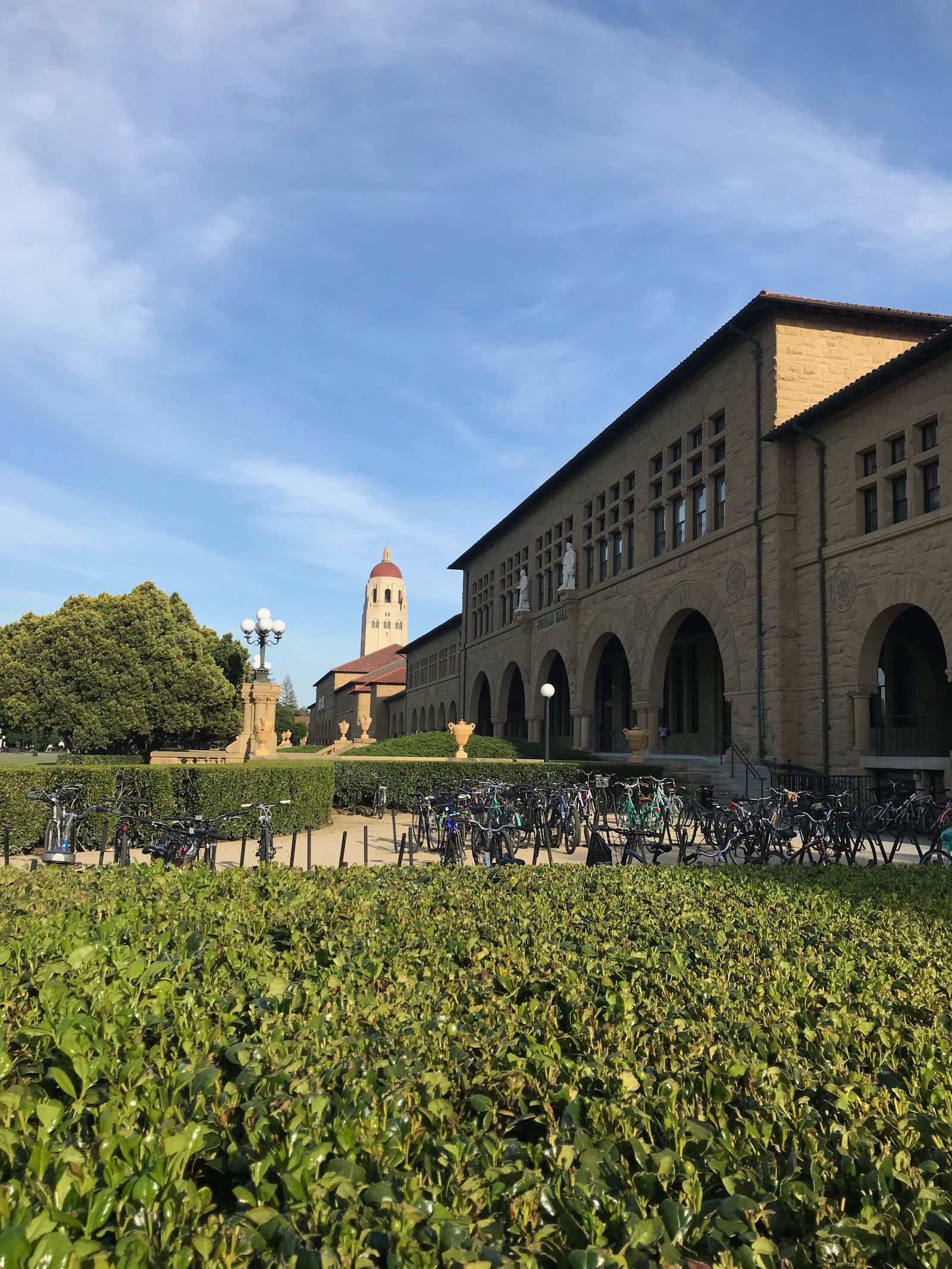
Hoover Tower and Jordan Hall at Stanford University
Actively recruiting

Building and measuring clinical intelligence.

We develop and rigorously evaluate AI-native systems that make high-quality, proactive, personalized, and continuous care accessible at scale.

The clinical intelligence ecosystem

Better care is a systems problem.

Clinicians, patients, and researchers each generate data, decisions, and evidence. We connect that cycle to make high-quality care possible for all, at scale.

Clinicians

Clinicians make high-stakes decisions from fragmented records, guided by an evidence base no single human could ever keep up with. We develop and rigorously evaluate technology-enabled approaches that can make high-quality, evidence-based care the norm, at a previously unthinkable scale.

Risk stratification · Personalized recommendations · Clinical decision support

Patients

Patients bring lived experience and continuous data that medicine usually misses. We study how to make data from wearable devices clinically useful by developing the technical infrastructure and clinical evidence required for these signals to earn a meaningful role in care and research, so patients can ask better questions, act earlier, and become genuine partners in care.

Personal trajectories · Shared decision-making · Proactive care · Health literacy

Researchers

Research is fragmented, often irreproducible, and growing beyond human scale. We investigate how modern agentic systems can serve as scientific companions to generate and synthesize evidence at unprecedented speed and scale, with rigor and reproducibility by design.

Rigor & reproducibility · Evidence synthesis · Living evidence

What we learn from

The multimodal, longitudinal record of health.

We combine clinical records, patient signals, and published evidence to reconstruct health over time, connecting information that no single source can reveal alone.

Clinical records

Multimodal EHR data, including unstructured notes, laboratory results, imaging, and diagnostics, trace each patient’s clinical trajectory.

Notes · Labs · Imaging · Diagnostics

Patient signals

Wearable devices, remote patient monitoring (RPM), and patient-reported outcomes (PROs) capture physiology and experience between visits.

Wearables · RPM · PROs · Trends

Published evidence

Trials, observational studies, systematic reviews, meta-analyses, and guidelines capture what is known, and where uncertainty remains.

Trials · Cohorts · Reviews · Guidelines

Our methods

AI, machine learning, and clinical epidemiology.

Consequential clinical problems set our agenda; methods serve them. We take a platform approach, integrating AI and machine learning with causal inference and clinical epidemiology to generate reliable clinical intelligence from longitudinal, multimodal health data.

Agentic and conversational AI

We evaluate conversational AI and agentic systems for high-fidelity, end-to-end clinical task execution using orchestration harnesses, patient-actor arenas, and synthetic patients.

Statistical and machine learning

We apply the latest data science methods, to develop and validate dynamic risk stratification and outcome prediction models from longitudinal, multimodal health data.

Clinical epidemiology and meta-research

We combine principled study design with Bayesian and meta-analytic approaches to estimate effects and support personalized inference, within a paradigm of embedded rigor and reproducibility.

What guides us

Our scientific signature.

We are a value-driven lab, guided by non-negotiable principles that define why we are here, which questions we pursue, and how we operate.

Clinically grounded

Profoundly motivated by clinically consequential problems and opportunities, choosing each method in service of the clinical question rather than the reverse.

Data-driven

Committed to making sense of complex data by generating reproducible evidence that informs decisions testable against outcomes that matter.

Multidisciplinary by design

Consequential clinical problems demand medicine, data science, engineering, design, and the human sciences working in concert.

Technology-enabled

Technology is indispensable to the next generation of medicine, with the power to translate scientific innovation into new clinical possibilities.

Scientifically honest

Guided by scientific rigor, honest about uncertainty, and committed to open, reproducible practices others can inspect and extend.

Real-world impact

Committed to incubating ideas and carrying them across the entire translational lifecycle, from idea to product and from bench to bedside; the paper is not the finish line.

Active research

Toward proactive, personalized, longitudinal care.

Our current research investigates how technology can transform longitudinal care into a proactive, continuously learning system, across clinicians, patients, and researchers.

AI-enabled statin prescribing at scale

An estimated 20 million U.S. adults in need of statins have never been prescribed one, leaving substantial preventable cardiovascular risk. We combine longitudinal EHR data with AI-derived clinical context to create a system capable of proactively identifying patients in need of medication at superhuman scale, with the potential to bring proactive care to millions not receiving it today.

Patient-driven evidence-based care

Clinical records are incomplete and often outdated; one in five patients who reads their notes reports a mistake, and nearly half consider it serious. We are developing a conversational, agentic AI system that elicits and structures missing information as a clinician would during a visit. Using statins as a test case, we aim to show that this richer record can identify previously unknown eligible patients and dramatically expand access to evidence-based care.

AI-enabled reproducible research

Clinical research still relies on painstaking, fragmented workflows that make sophisticated analyses slow to execute and difficult to reproduce. We investigate how agentic systems can orchestrate end-to-end data analysis within transparent, auditable, and reproducible workflows. By making rigor scalable, we aim to enable researchers to generate and update reliable evidence at a pace previously impossible.

In the News

Updates from the lab, our collaborators, and the work taking shape.

From PhD student to professor: Stelios Serghiou returns to Stanford Epidemiology (opens in a new tab)

A Q&A with the Department of Epidemiology and Population Health on returning to Stanford as faculty, what years at Google Health and Prolaio taught him, and how to make rigorous science the easy thing to do rather than an act of individual heroism.

Stay close to the work

Evidence, ideas, and the occasional improbable question.

The newsletter is still hypothetical. Sign up now, and we'll write when there is something worth saying.